

When I was a child in the 1980s, I collected baseball cards because an adult in my life (I can’t remember who) thought I should because they did when they were my age. I gave up on them pretty fast, happily replacing them with comic books, action figures, and superhero trading cards. This was at the start of the speculator boom, when people were buying up multiple copies of comic books such as X-Men #1 (1991) as investments, speculating their value would skyrocket like Action Comics #1 (1938) or Amazing Fantasy #15 (1962). Comics companies responded to this boom by increasing the number of issues produced to feed the demand. This ended up flooding the market with so many copies that today copies of X-Men #1, the Guinness World Record holder for most issues sold at over 8 million, can be found in bargain bins at nearly every comic book shop in the world for about $5.
But what does this have to do with action figures? Like comic books, toys, specifically action figures, started to be viewed as potential investments. The idea that action figures could be considered rare collectibles gained so much traction that it became a sort of shorthand for identifying the “nerd” in entertainment. The movie “The 40-Year-Old Virgin” made a point of showing the audience all the action figures in Andy’s apartment and included a scene where he defended his collection, pointing out that an Oscar Goldman figure from “The 6-Million-Dollar Man” was more valuable than the Steve Austin figure. The show “The Big Bang Theory” featured an episode in its fifth season where Brent Spiner, the actor famous for his portrayal of Data on “Star Trek: The Next Generation,” tears open a signed, mint on card Wesley Crusher action figure that Wil Wheaton just presented to Sheldon Cooper, to the latter’s horror and outrage. This idea has permeated modern society to the point where, whenever I mention to someone that I collect action figures, they immediately respond with, “you’re keeping them in their boxes, right? They’re worth more like that!”
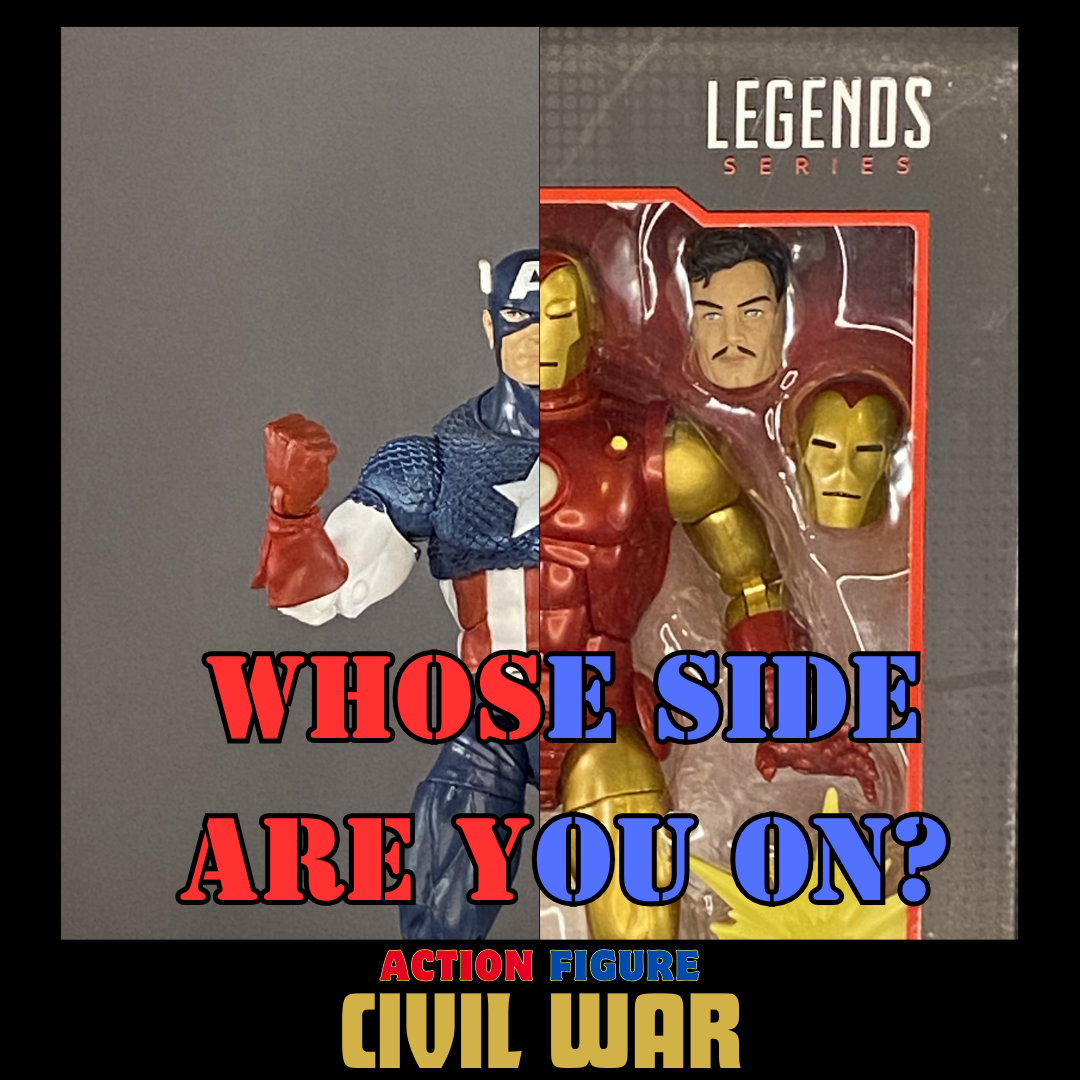
There are two prevailing trains of thought in the adult action figure collector community. One is in line with what I previously mentioned, that action figures have the potential to be worth a great deal more in the future, so they should be kept in package, with the packaging being kept as pristine as possible. The other camp maintains that action figures are toys and are meant to be enjoyed; that a collection of figures should be out of package and posed on shelves or in dioramas to be properly enjoyed. This of course is not a binary. Many collectors will open the majority of their figures, leaving only a few choice pieces in package. Others buy two of every figure they collect, one for display, the other for play. I myself fall somewhere between these, opening a great deal of the figures I collect, but for certain lines purchasing multiples to keep in package. At the end of the day, there is no real right or wrong way to collect, so long as no one is being harmed by the collector. Yet there are some concerns of which anyone looking to start an action figure collection should be aware.

The picture to the left helps illustrate one concern with opening action figures. When there is enough demand for a figure, toy companies will often reissue that figure. To avoid confusion, they will reissue the figure in packaging that acknowledges it as a reissue.
The problem is: how does one know if a figure is the original release or a reissue when it is out of the packaging? In that picture, you see three figures in my collection, all of the character Moon Knight. The one on the left is a figure that was opened for display, the top right an exclusive figure from Walgreens sold in 2020, and the bottom right an exclusive figure from Target sold in 2023. No one could be blamed for not knowing just by looking whether the unpackaged figure was from the original run or not. An experienced collector might be able to, by examining the figure and looking for product codes, but even then they would have to know what the product codes mean, and which product codes go with each release. So the unpackaged figure, without being able to be easily verified as the original or a reissue, takes a hit in its value. Point to the in package collector!
(By the way, that opened Moon Knight is the 2023 release. They were much easier to get one’s hands on than the 2020 release.)
Now let’s look at a concern that accompanies keeping figures in their original packaging and taking steps to preserve them. This picture was taken in the guest bedroom here at Nerdy Corps HQ. My collection has grown so large the in package figures no longer have room to be displayed in the bonus room, or what my wife and I affectionately call it, “the boy cave.”

All that packaging, with all that important product information and often amazing artwork, takes up a lot of real estate. Blister card packaging is often very tall and wide, with the plastic blister holding the figure jutting out asymmetrically, making displaying all of one’s figures on a shelf or hung up on a wall difficult. Even more difficult is storing the figures one can’t display because of space concerns in a box or tote in an efficient manner.

Compare that to this picture, taken in the boy cave, of a corner shelving unit displaying figures opened and posed. The argument favoring this method of collecting is that displaying figures in this manner is more efficient, allowing for more figures to be displayed in less space. When space is at a premium, efficiency tends to be preferred. Point to the out of package collector!
But this site is supposed to look at things through the lens of a former US servicemember. Are there any concerns that might be unique to that community, but that someone outside of that community could relate to, given context? Absolutely! One such concern is space. With servicemembers, space is not merely a concern over how to display a collection, but a concern of how to even have a collection. Junior enlisted servicemembers, who tend to be single, are required to be housed in what is now called unaccompanied on-base housing. Formerly know as barracks or dorms, these tend to be single bedrooms about 110 square feet (or less) in size, with common living, kitchen, and bathroom for two to four bedrooms. Even with additional authorized space for issued tactical equipment elsewhere in the building, there’s not much space for any personal possessions, much less a large action figure collection. It isn’t much easier for servicemembers with dependents or officers and noncommissioned officers (NCOs–sergeants and petty officers) either. These servicemembers might be authorized apartment, condominium, or single detached housing on base, but they tend to be smaller than off base equivalents. Even those authorized to live in off base housing are more often than not renting, as servicemembers end up moving every three to four years as they are ordered to new assignments.
This leads to another concern for servicemembers trying to have an action figure collection. Moving is always difficult, and moving while in the military is even more difficult. More often than not, when a servicemember is reassigned, it involves a long distance move. Sometimes this means moving across the country. Other times, it means moving to another continent. Whether a servicemember chooses to use a moving service at government expense or chooses to move themselves and be reimbursed, there is always the potential for loss of and damage to possessions. Additionally, there are weight limits for possessions during a move. This usually means if a servicemember exceeds their allowance, they are financially responsible for that excess. It doesn’t happen often, but the longer someone serves, the more they accumulate. Higher rank grants a servicemember a higher weight allowance, but it can still be a race. I remember when I was reassigned from Korea to Fort Johnson (formerly Fort Polk) in 2019. I was recently promoted but my reassignment orders were issued under my old rank. When my possessions arrived at my new residence, I was informed I would have to pay for excess weight as I was over my limit by 1000 pounds. Luckily, that was calculated from my old rank. When my promotion was factored in, I was actually 1000 pounds under. Bullet dodged!
As I said at the beginning of this dispatch, there is no right or wrong way to collect action figures. It’s really all about what makes you happy as a collector. This was more to provide some insight into collecting, to help one decide what kind of collector they’d like to be, and to provide a little context for the additional hurdles a collector can expect as a servicemember.
But what do you think? Please leave an after action review in the comments! Until next time!


Leave a Reply